

Substitua Aquelas Frases Básicas Por Estas Alternativas Avançadas!
Hello, lovely students,
Olá, queridos alunos,
and welcome back to "English with Lucy".
e bem-vindos de volta ao "Inglês com Lucy".
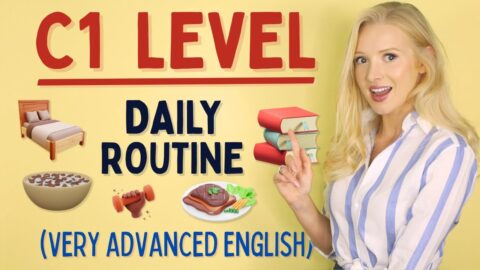
Today I'm going to be teaching you
Hoje vou ensinar a vocês
lots and lots of advanced phrases
muitas e muitas frases avançadas
that you can use in daily conversation.
que vocês podem usar na conversa diária.
We are going to take basic phrases
Vamos pegar frases básicas
and I'm going to give you advanced alternatives
e vou dar alternativas avançadas
so you can really expand your vocabulary.
para que vocês possam realmente expandir seu vocabulário.
Before we get started,
Antes de começarmos,
I'd like to remind you
gostaria de lembrar vocês
that there is, as always, a free PDF
que há, como sempre, um PDF gratuito
that goes with today's lesson.
que acompanha a lição de hoje.
It contains everything we're going to talk about today,
Ele contém tudo o que vamos falar hoje,
the full list of alternatives.
a lista completa de alternativas.
Plus, an extra quiz at the end
Além disso, um quiz extra no final
so you can put what you've learned into practise.
para que vocês possam colocar em prática o que aprenderam.
If you'd like to download that free PDF, it is very helpful,
Se vocês quiserem baixar esse PDF gratuito, ele é muito útil,
just click on the link in the description box.
basta clicar no link na caixa de descrição.
Enter your name and your email address.
Insiram seu nome e endereço de e-mail.
You sign up to my mailing list.
Vocês se inscrevem na minha lista de e-mails.
The PDF will arrive directly into your inbox.
O PDF chegará diretamente na sua caixa de entrada.
And automatically after that,
E automaticamente depois disso,
every week you will receive my free lesson PDFs.
toda semana vocês receberão meus PDFs de lições gratuitas.
You'll also receive my news,
Vocês também receberão minhas notícias,
my course updates, and my office.
atualizações do meu curso e meu escritório.
It's a free service and you can unsubscribe at any time.
É um serviço gratuito e você pode cancelar a inscrição a qualquer momento.
This video is going to be perfect
Este vídeo será perfeito
for improving your vocabulary skills.
para melhorar suas habilidades de vocabulário.
If you'd like to expand your vocabulary even further
Se vocês quiserem expandir seu vocabulário ainda mais
I have designed a 30-day challenge
Eu criei um desafio de 30 dias
especially, specifically for you,
especialmente, especificamente para vocês,
for students of English
para estudantes de inglês
that want to improve and expand their vocabulary.
que querem melhorar e expandir seu vocabulário.
They want to speak
Eles querem falar
with that beautiful, rich English vocabulary.
com aquele vocabulário de inglês bonito e rico.
Let me present to you the Vocabulary Expansion Challenge.
Permitam-me apresentar a vocês o Desafio de Expansão de Vocabulário.
It's a powerful name, right?
É um nome poderoso, certo?
It's a bloody powerful course.
É um curso incrivelmente poderoso.
How does it work?
Como funciona?
Well, each day we take a simple everyday concept
Bem, a cada dia pegamos um conceito simples do cotidiano
that you will find in your daily life.
que vocês encontrarão na sua vida diária.
Moods and feelings, likes and dislikes,
Humores e sentimentos, gostos e aversões,
mistakes and apologies, memory and learning.
erros e desculpas, memória e aprendizado.
We take the words that you likely already know
Pegamos as palavras que vocês provavelmente já conhecem
and we supercharge them.
e as potencializamos.
From those simple everyday words,
Dessas palavras simples do cotidiano,
we show you all of the synonyms, all of the related idioms.
mostramos a vocês todos os sinônimos, todos os idiomas relacionados.
We create a map of related vocabulary
Criamos um mapa de vocabulário relacionado
for you to learn easily.
para vocês aprenderem facilmente.
And the most important part is,
E a parte mais importante é,
that we teach them to you in context, through story.
que os ensinamos a vocês em contexto, através de histórias.
This is the vital part of this challenge.
Esta é a parte vital deste desafio.
You will learn well over 250 rich, new words and phrases
Vocês aprenderão bem mais de 250 palavras e frases ricas e novas
to drastically expand your vocabulary in just 30 days.
para expandir drasticamente seu vocabulário em apenas 30 dias.
You'll take over 650 exercise questions
Vocês farão mais de 650 perguntas de exercícios
to really help you remember
para realmente ajudar a lembrar
and retain what you've learned in those lessons.
e reter o que aprenderam nessas lições.
When you purchase the course,
Ao adquirir o curso,
you get lifetime access to the course content.
vocês recebem acesso vitalício ao conteúdo do curso.
It will never be taken away from you.
Nunca será retirado de vocês.
You can review it. You can retake the lessons.
Vocês podem revisá-lo. Podem refazer as lições.
You can retake the exercises.
Podem refazer os exercícios.
We also offer a 30-day money back guarantee.
Também oferecemos uma garantia de devolução do dinheiro em 30 dias.
If you try the course and it's too easy
Se vocês experimentarem o curso e for muito fácil
or it's too difficult or it's not what you're looking for,
ou muito difícil ou não for o que vocês procuram,
let us know.
nos avisem.
We'll give you your money back. No problem.
Nós devolveremos seu dinheiro. Sem problemas.
We're running a special price.
Estamos com um preço especial.
If you'd like to find out more,
Se vocês quiserem saber mais,
just click on the link in the description box.
basta clicar no link na caixa de descrição.
It's all there for you.
Está tudo lá para vocês.
Right. Let's start it with the lesson.
Certo. Vamos começar com a lição.
Firstly, let's talk about introductions.
Primeiramente, vamos falar sobre apresentações.
Imagine you're in a business meeting
Imaginem que vocês estão em uma reunião de negócios
and you want to introduce your colleague
e querem apresentar seu colega
to someone you know.
a alguém que vocês conhecem.
A simple way to do this is to say,
Uma maneira simples de fazer isso é dizer:
"This is my colleague, Sarah."
"Esta é minha colega, Sarah."
It's fine. It's just a little bit plain and boring.
Está bom. É só um pouco simples e chato.
We have some better alternatives.
Temos algumas alternativas melhores.
You can also say,
Vocês também podem dizer:
"Have you met Sarah? We work together."
"Vocês já conheceram a Sarah? Nós trabalhamos juntas."
or, "Have you been introduced to Sarah?"
ou, "Vocês já foram apresentados à Sarah?"
If you want to introduce yourself to someone,
Se vocês quiserem se apresentar a alguém,
a simple way to say this is,
uma maneira simples de dizer isso é:
"Hello, I'm Lucy."
"Olá, sou a Lucy."
Obviously, you would insert your own name.
Obviamente, vocês inserem o próprio nome.
This is fine.
Está bom.
But of course there are some other ways to say this.
Mas é claro que há outras maneiras de dizer isso.
You could say, "I don't think we've been introduced,"
Vocês poderiam dizer: "Acho que não fomos apresentados,"
or "I don't think we've met. I'm Lucy."
ou "Acho que não nos conhecemos. Eu sou a Lucy."
Finally, let's imagine that you noticed
Finalmente, imaginem que vocês notaram
that the person you're talking to doesn't know many people.
que a pessoa com quem vocês estão falando não conhece muitas pessoas.
Luckily, you do know some people so you could offer,
Felizmente, vocês conhecem algumas pessoas, então poderiam oferecer:
do you need any introductions?
Vocês precisam de alguma apresentação?
Do you need to be introduced to anyone?
Vocês precisam ser apresentados a alguém?
Let's move on to alternative ways
Vamos passar para formas alternativas
of saying "It's nice to meet you."
de dizer "É um prazer conhecê-lo(a)."
When you meet someone for the first time,
Quando vocês conhecem alguém pela primeira vez,
it's polite to say, "It's nice to meet you,"
é educado dizer: "É um prazer conhecê-lo(a),"
or just "Nice to meet you."
ou apenas "Prazer em conhecê-lo(a)."
An alternative way to say this is,
Uma maneira alternativa de dizer isso é:
"It's a pleasure to meet you."
"É um prazer conhecê-lo(a)."
It's a pleasure to meet you.
É um prazer conhecê-lo(a).
That's something I really like about the word pleasure.
Isso é algo que eu realmente gosto na palavra 'pleasure'.
I think it's the zh sound. Pleasure.
Acho que é o som de 'zh'. Prazer.
This is quite a formal phrase.
Esta é uma frase bastante formal.
You might want to use it in a work environment.
Vocês podem querer usá-la em um ambiente de trabalho.
We also have a less formal version
Também temos uma versão menos formal
which is "Glad to meet you."
que é "Contente em conhecê-lo(a)."
I'm glad to meet you.
Estou contente em conhecê-lo(a).
Glad means happy, pleased.
Contente significa feliz, satisfeito.
Finally, a really good alternative to use
Finalmente, uma ótima alternativa para usar
with someone that you have spoken to via email
com alguém com quem vocês falaram por e-mail
or over the phone or via Zoom.
ou por telefone ou via Zoom.
It's great to finally meet you in person.
É ótimo finalmente conhecê-lo(a) pessoalmente.
I feel like I know you already
Sinto que já te conheço
'cause we've spoken so much via email.
porque conversamos muito por e-mail.
It means that you're happy to see them face to face
Significa que vocês estão felizes em vê-los pessoalmente
and not just through a telephone line or a computer screen.
e não apenas por uma linha telefônica ou tela de computador.
Let's move on to another vital part of conversation,
Vamos passar para outra parte vital da conversa,
"How are you?".
"Como você está?".
How are you?
Como você está?
One of the most overused questions in my opinion.
Uma das perguntas mais usadas na minha opinião.
"How are you?" suitable for all occasions.
"Como você está?" adequado para todas as ocasiões.
You can use it with your CEO, with your boss,
Vocês podem usar com seu CEO, com seu chefe,
with your colleagues, with your friends and family.
com seus colegas, com seus amigos e família.
But if you're in less formal situations,
Mas se vocês estiverem em situações menos formais,
then you might want to say something informal,
então vocês podem querer dizer algo informal,
like, "How's it going?"
como, "Como vai?"
or "How's everything with you?"
ou "Como estão as coisas com você?"
You could also say, "What's going on?"
Vocês também poderiam dizer: "O que está acontecendo?"
or "What have you been up to?"
ou "O que você tem feito?"
That's a really common question.
Essa é uma pergunta muito comum.
"What have you been up to?"
"O que você tem feito?"
is what have you been doing lately.
é o que você tem feito ultimamente.
Both of these questions
Ambas as perguntas
invite the person you're speaking to
convidam a pessoa com quem vocês estão falando
to update you on what they've been doing
a atualizar vocês sobre o que ela tem feito
since you last saw them.
desde a última vez que vocês a viram.
Finally, you could ask "How's life?"
Finalmente, vocês poderiam perguntar: "Como está a vida?"
or "How's life treating you?"
ou "Como a vida está te tratando?"
That's very informal. I like that one.
Isso é muito informal. Eu gosto dessa.
Okay. We have some great options for "How are you?"
Ok. Temos algumas ótimas opções para "Como você está?"
But what about the response?
Mas e a resposta?
"I'm fine, thanks," is just a little bit boring.
"Estou bem, obrigado," é um pouco chato.
If you are also getting bored
Se vocês também estão ficando entediados
of repeating the same phrase over and over again,
de repetir a mesma frase várias e várias vezes,
I have some alternatives.
tenho algumas alternativas.
Ticking along. I'm ticking along.
Indo em frente. Estou indo em frente.
This means, yeah, still going.
Isso significa, sim, ainda estou indo.
Another really popular one is "Can't complain".
Outra muito popular é "Não posso reclamar".
Nothing's going wrong. I can't complain.
Nada está dando errado. Não posso reclamar.
We also have "Same old, same old."
Também temos "Na mesma, de sempre."
These are always of saying that things aren't great,
Essas são sempre formas de dizer que as coisas não estão ótimas,
but they're okay.
mas estão bem.
I'm fine. I'm okay.
Estou bem. Estou ok.
They're very neutral answers to "How are you?"
São respostas muito neutras para "Como você está?"
If you want to give a really positive answer,
Se vocês quiserem dar uma resposta realmente positiva,
if you are having a really great day,
se vocês estão tendo um dia realmente ótimo,
then you could say something like "I couldn't be better."
então vocês poderiam dizer algo como "Eu não poderia estar melhor."
I couldn't be better.
Eu não poderia estar melhor.
Or on the opposite hand, if you're having a terrible time,
Ou, por outro lado, se vocês estão tendo um momento terrível,
you could say, "Could be better."
vocês poderiam dizer: "Poderia estar melhor."
I could be better. I'm not doing that well, thank you.
Eu poderia estar melhor. Não estou indo tão bem, obrigado.
Remember that English speakers
Lembrem-se que os falantes de inglês
don't often give honest answers
geralmente não dão respostas honestas
when they're asked, "How are you?"
quando lhes perguntam: "Como você está?"
So you know, the house could have burnt down
Então, a casa poderia ter pegado fogo
the night before
na noite anterior
and they'll still say something like "Could be better.
e eles ainda diriam algo como "Poderia estar melhor.
Yeah. Could be better."
Sim. Poderia estar melhor."
Let's move on to the next question.
Vamos para a próxima pergunta.
Where do you work?
Onde você trabalha?
When you're getting to know someone,
Quando vocês estão conhecendo alguém,
really common question is, where do you work?
uma pergunta muito comum é: onde você trabalha?
There are other ways of saying this.
Há outras maneiras de dizer isso.
A really common one in British English is, what do you do?
Uma muito comum no inglês britânico é: o que você faz?
What do you do?
O que você faz?
That's shortened down from what do you do for a living?
Isso é uma abreviação de o que você faz para viver?
If you know someone quite well
Se vocês conhecem alguém muito bem
and you know that they've recently changed jobs
e sabem que ela mudou de emprego recentemente
or they might change jobs quite often,
ou pode mudar de emprego com frequência,
you could ask a question
vocês poderiam fazer uma pergunta
such as, where are you working right now?
como: onde você está trabalhando agora?
Or, what are you doing for work at the moment?
Ou, o que você está fazendo para trabalhar no momento?
Or even, did you end up getting that promotion?
Ou até mesmo, você acabou conseguindo aquela promoção?
Or did you end up getting that job?
Ou você acabou conseguindo aquele emprego?
You'd only asked that if they'd already mentioned
Vocês só perguntariam isso se eles já tivessem mencionado
that they were in the running for a new job.
que estavam concorrendo a um novo emprego.
Another really common question is, where are you from?
Outra pergunta muito comum é: de onde você é?
Where are you from?
De onde você é?
And we have some alternate ways of saying that.
E temos algumas formas alternativas de dizer isso.
If you want to make it sound more natural,
Se vocês quiserem que soe mais natural,
you could say, "Whereabouts are you from?'
vocês poderiam dizer: "De que parte você é?"
That's kind of the rough area.
Isso é mais ou menos a área geral.
Whereabouts are you from?
De que parte você é?
If you are wondering if someone's from same area
Se vocês estão se perguntando se alguém é da mesma área
that you are in right now,
em que vocês estão agora,
you could say something like, "Are you local?
vocês poderiam dizer algo como: "Você é daqui?
Are you from around this local area?"
Você é daqui desta área local?"
Are you from around here?
Você é daqui?
Or a really informal one,
Ou uma muito informal,
are you from this neck of the woods?
você é desta "neck of the woods"?
"Neck of the woods" means local area, common British slang.
"Neck of the woods" significa área local, gíria britânica comum.
You can use the idiom "neck of the woods"
Vocês podem usar a expressão "neck of the woods"
in lots of different questions,
em muitas perguntas diferentes,
like, how's the weather in your neck of the woods?
como: como está o tempo na sua "neck of the woods"?
In your local area?
Na sua área local?
And of course weather,
E claro, o tempo,
my favourite topic as a British person.
meu tópico favorito como britânica.
Brings me on to my next topic: weather.
Me leva ao meu próximo tópico: o tempo.
The number one small talk topic in the UK is weather.
O principal tópico de conversa fiada no Reino Unido é o tempo.
I find myself mentioning it all the time.
Eu me pego mencionando isso o tempo todo.
I can't help it. It's like word vomit.
Não consigo evitar. É como um vômito de palavras.
I don't know what to say. There's an awkward moment.
Não sei o que dizer. Há um momento constrangedor.
So I mention the weather.
Então eu menciono o tempo.
A really common British phrase is, "Lovely weather today."
Uma frase britânica muito comum é: "Tempo adorável hoje."
Lovely weather today.
Tempo adorável hoje.
Alternatively, assuming you have sunshine,
Alternativamente, supondo que vocês tenham sol,
could be "Beautiful weather out."
poderia ser "Tempo bonito lá fora."
Beautiful weather out.
Tempo bonito lá fora.
Beautiful out today, isn't it? Beautiful out.
Bonito lá fora hoje, não é? Bonito lá fora.
Meaning, it's lovely outside today.
Significando, está adorável lá fora hoje.
Unfortunately, most often it is not beautiful
Infelizmente, na maioria das vezes não está bonito
outside in the UK.
lá fora no Reino Unido.
We can say phrases like, "Oh, bit dreary today."
Podemos dizer frases como: "Oh, um pouco sombrio hoje."
Dreary means dull, grey, little bit depressing.
Sombrio significa opaco, cinzento, um pouco deprimente.
Ugh. So dreary today.
Ugh. Tão sombrio hoje.
One thing we possibly like doing more than talking
Uma coisa que possivelmente gostamos de fazer mais do que falar
about the current weather
sobre o tempo atual
is talking about the future weather, what it might be like.
é falar sobre o tempo futuro, como ele pode ser.
Our weather forecasts are hilariously inaccurate.
Nossas previsões do tempo são hilariamente imprecisas.
Hilarious. I don't know why we bother with them.
Hilário. Não sei por que nos incomodamos com elas.
It says it will rain. It's glorious sunshine.
Diz que vai chover. É um sol glorioso.
It says it'll be sunshine. It's a thunderstorm.
Diz que vai fazer sol. É uma tempestade.
It snows.
Nevou.
We love talking about the weather forecast.
Adoramos falar sobre a previsão do tempo.
So we could say something like,
Então poderíamos dizer algo como:
"Can you believe it's going to be 27 degrees this weekend?"
"Você acredita que fará 27 graus neste fim de semana?"
Or, "I can't believe it's going to rain all day tomorrow."
Ou, "Não acredito que vai chover o dia todo amanhã."
Well, my personal favourite,
Bem, meu favorito pessoal,
"I've heard it's going to snow overnight."
"Ouvi dizer que vai nevar durante a noite."
There is nothing more exciting
Não há nada mais emocionante
than opening your window and seeing loads of snow,
do que abrir sua janela e ver muita neve,
unless you have somewhere to be.
a menos que você tenha algum lugar para ir.
Not exciting.
Não é emocionante.
Okay, let's discuss alternatives for the question:
Ok, vamos discutir alternativas para a pergunta:
do you want to...
você quer...
Asking someone if they want to do something.
Perguntar a alguém se quer fazer algo.
Do you want to go for a coffee?
Você quer ir tomar um café?
Do you want to have fish and chips tonight?
Você quer comer peixe com batatas fritas hoje à noite?
An informal but very British sounding alternative
Uma alternativa informal, mas com som muito britânico,
is, do you fancy?
é, você gostaria?
Do you fancy?
Você gostaria?
Do you fancy going for a coffee?
Você gostaria de ir tomar um café?
Do fancy fish and chips tonight?
Você gostaria de peixe com batatas fritas hoje à noite?
Hear me say, "do you".
Me ouçam dizer, "do you".
I almost say d'ya, d'ya.
Eu quase digo d'ya, d'ya.
D'ya fancy a coffee?
D'ya gostaria de um café?
Do you fancy fish and chips tonight?
Você gostaria de peixe com batatas fritas hoje à noite?
You could also replace "do you fancy"
Vocês também poderiam substituir "do you fancy"
with "what do you think about.."
por "o que você acha de..."
What do you think about going for a coffee?
O que você acha de ir tomar um café?
What do you think about having fish and chips tonight?
O que você acha de comer peixe com batatas fritas hoje à noite?
Finally, if you already made a decision about something
Finalmente, se vocês já tomaram uma decisão sobre algo
but you want to check that someone agrees with you,
mas querem verificar se alguém concorda com vocês,
you could say, "Any objections to fish and chips tonight?"
vocês poderiam dizer: "Alguma objeção a peixe com batatas fritas hoje à noite?"
or, "Any objections to a coffee?"
ou, "Alguma objeção a um café?"
Have you got any objection to a coffee?
Você tem alguma objeção a um café?
And then you'll hope they say, "That'll be lovely,"
E então vocês esperam que digam: "Seria adorável,"
because you've already ordered them.
porque vocês já os pediram.
Let's move on to the question, do you agree?
Vamos passar para a pergunta, você concorda?
Do you agree?
Você concorda?
It's the easiest way to ask someone's opinion on something
É a maneira mais fácil de perguntar a opinião de alguém sobre algo
but there are some really good alternatives.
mas há algumas alternativas muito boas.
We can say, "What do you think?"
Podemos dizer: "O que você pensa?"
or the really British one, "What do you reckon?"
ou a muito britânica, "O que você acha?"
What do you reckon?
O que você acha?
I reckon that we shouldn't go.
Eu acho que não deveríamos ir.
Both of these are quite informal
Ambos são bastante informais
but we do have some nice formal ones for formal situations,
mas temos algumas formas formais agradáveis para situações formais,
such as "I'd love to hear your thoughts.
como "Gostaria de ouvir seus pensamentos.
I'd love to hear your thoughts on this,"
Gostaria de ouvir seus pensamentos sobre isso,"
or "I'm interested to know what you think about this idea."
ou "Tenho interesse em saber o que você pensa sobre esta ideia."
What about changing the topic?
E quanto a mudar de assunto?
It's often one of the most awkward things that we have to do
É frequentemente uma das coisas mais estranhas que temos que fazer
second to ending a conversation,
depois de terminar uma conversa,
which we'll talk about later.
o que falaremos mais tarde.
Instead of saying, "Can I change the topic?"
Em vez de dizer: "Posso mudar de assunto?"
or "Can we talk about something else?"
ou "Podemos falar sobre outra coisa?"
We could say something like, "I wanted to ask you about X."
Poderíamos dizer algo como: "Eu queria te perguntar sobre X."
I wanted to ask you about the new cafe in town.
Eu queria te perguntar sobre o novo café na cidade.
Another really good one is "speaking of".
Outra muito boa é "falando nisso".
Speaking of.
Falando nisso.
If the other person mentioned something
Se a outra pessoa mencionou algo
that we could use to change the topic,
que poderíamos usar para mudar de assunto,
we could say, "Ah, speaking of that, what about this?"
poderíamos dizer: "Ah, falando nisso, e sobre isso?"
Speaking of lunch, have you tried the new cafe in town?
Falando em almoço, você já experimentou o novo café na cidade?
Another option, "that reminds me... "
Outra opção, "isso me lembra..."
That reminds me, how's Julie?
Isso me lembra, como está a Julie?
You can also use the phrase "before I forget... "
Vocês também podem usar a frase "antes que eu me esqueça..."
Ah, before I forget, I must ask you this...
Ah, antes que eu me esqueça, preciso te perguntar isso...
And ask something completely different.
E perguntar algo completamente diferente.
Finally, you could say, "While I've got you here... "
Finalmente, vocês poderiam dizer: "Enquanto te tenho aqui..."
While I've got you here,
Enquanto te tenho aqui,
I want to ask you about a new project.
eu quero te perguntar sobre um novo projeto.
You'll often hear that phrase used in business contexts.
Vocês frequentemente ouvirão essa frase usada em contextos de negócios.
The final conversation phrase is "goodbye".
A última frase de conversação é "adeus".
We have some really good alternatives for this word.
Temos algumas alternativas muito boas para esta palavra.
One of the most common alternatives is "See you later."
Uma das alternativas mais comuns é "Até mais."
If we're saying this informally,
Se estamos dizendo isso informalmente,
we can shorten it to "See ya."
podemos abreviar para "Até já."
See you later. See ya.
Até mais. Até já.
But if you've been chatting to someone for too long
Mas se vocês estiveram conversando com alguém por muito tempo
and you want to leave,
e vocês querem ir embora,
I have some really good examples.
tenho alguns exemplos muito bons.
One is, "I must be off."
Um é: "Preciso ir."
Oh, I must be off, paired with looking at your watch.
Ah, preciso ir, combinado com olhar para o seu relógio.
Make sure you're actually wearing a watch,
Certifiquem-se de que estão realmente usando um relógio,
'cause I keep doing that and I'm not wearing one
porque eu continuo fazendo isso e não estou usando um
and it's a bit embarrassing.
e é um pouco embaraçoso.
Another, "I've got to run but it was great to see you,"
Outra, "Preciso correr, mas foi ótimo te ver,"
or "It's been lovely chatting but I need to shoot off."
ou "Foi ótimo conversar, mas preciso zarpar."
These three phrases tell the other person
Essas três frases dizem à outra pessoa
that you have somewhere else to be.
que vocês têm outro lugar para ir.
Of course, that doesn't need to be true,
Claro, isso não precisa ser verdade,
but that secret can stay between you and me.
mas esse segredo pode ficar entre você e eu.
Another option you can use is,
Outra opção que vocês podem usar é,
"Let's catch up properly some time."
"Vamos nos encontrar para conversar direito alguma hora."
Meaning, I don't have enough time
Significando, não tenho tempo suficiente
to properly chat to you now,
para conversar direito com você agora,
let's do it another time.
vamos fazer isso em outra hora.
In the office, people will often say,
No escritório, as pessoas frequentemente dirão,
"Right, let's get back to it," or "Let's get back to work."
"Certo, vamos voltar ao trabalho," ou "Vamos voltar ao trabalho."
British people will often slap their knees or slap the table
Os britânicos frequentemente baterão nos joelhos ou na mesa
and say, "Right. Right, I've got to go,"
e dirão: "Certo. Certo, preciso ir,"
or "Right, I must get some work done."
ou "Certo, preciso fazer algum trabalho."
So on that note,
Então, a esse respeito,
right, I must get back to it.
certo, preciso voltar ao trabalho.
I need to do some more work today,
Preciso fazer mais trabalho hoje,
and you have some more work to do as well.
e vocês também têm mais trabalho a fazer.
You need to download the free PDF and take the quiz.
Vocês precisam baixar o PDF gratuito e fazer o quiz.
That's it for today's lesson.
É tudo pela lição de hoje.
I hope you enjoyed it, and I hope you learned something.
Espero que vocês tenham gostado, e espero que tenham aprendido algo.
Don't forget to connect with me on all of my social media.
Não se esqueçam de se conectar comigo em todas as minhas redes sociais.
I've got my Instagram EnglishwithLucy, my English Instagram,
Tenho meu Instagram EnglishwithLucy, meu Instagram de inglês,
and @Lucy, my personal Instagram.
e @Lucy, meu Instagram pessoal.
I've also got my website englishwithlucy.co.uk
Também tenho meu site englishwithlucy.co.uk
where I've got a fantastic pronunciation tool.
onde tenho uma ferramenta fantástica de pronúncia.
It's a phonemic chart
É um gráfico fonêmico
and you can click on the phonemes
e vocês podem clicar nos fonemas
and hear me pronounce those phonemes
e me ouvir pronunciar esses fonemas
and words that contain those phonemes.
e palavras que contêm esses fonemas.
I've also got my vlogging channel, Lucy Bella,
Também tenho meu canal de vlogging, Lucy Bella,
where you can follow our lives here
onde vocês podem seguir nossas vidas aqui
in the English countryside.
no campo inglês.
And importantly, every single vlog is fully subtitled
E, importante, cada vlog é totalmente legendado
so that you can use them for listening practise
para que vocês possam usá-los para praticar a escuta
and expanding your vocabulary.
e expandir seu vocabulário.
You can also check out my English courses.
Vocês também podem conferir meus cursos de inglês.
That's englishwithlucy.co.uk/courses.
É englishwithlucy.co.uk/courses.
There are lots there to choose from.
Há muitas opções para escolher.
I will see you soon for another lesson.
Vejo vocês em breve para outra lição.
Legenda Anterior
Pronunciar Palavra
Traduzir Frase Atual
Pausar / Play
Aumentar Fonte Legenda
Próxima Legenda
Pronunciar Frase
Dois Cliques para Salvar Palavra
Desativar Legenda / Ativar Legenda
Diminuir Fonte Legenda